
Once a year, every district in Bhutan clears its calendar, puts on its finest gho and kira, and gathers in the dzong courtyard for the tshechu - days of sacred mask dance, music, blessing, and joyous social reunion. If you time your trip to one, it will likely be the most vivid memory you bring home. This guide explains what a tshechu actually is and how to experience one well; for dates, see the festival calendar, and for the wider context, our culture & traditions guide.
Major 2026 Festival Dates
| Festival | Dates | Highlight |
|---|---|---|
| Punakha Tshechu | Feb 27 – Mar 1, 2026 | Stunning riverside setting |
| Paro Tshechu | Mar 29 – Apr 2, 2026 | Famous for the pre-dawn unveiling of the giant silk scroll |
| Thimphu Tshechu | Sep 21 – Sep 23, 2026 | The capital's grandest celebration |
| Jambay Lhakhang Drup | Oct 26 – Oct 29, 2026 | Known for the "Naked Fire Dance" in Bumthang |
| Black-Necked Crane Festival | Nov 11, 2026 | A nature-focused celebration in Phobjikha Valley |
Dates follow the lunar calendar and shift each year — see the full Bhutan festival calendar for every festival and this year’s confirmed dates.
In This Guide
Culture · 7 min read
What Is a Tshechu?
A tshechu ("tenth day") is a religious festival held on the tenth day of a lunar month, honouring Guru Rinpoche - the master who brought Buddhism to Bhutan in the 8th century. Every district (dzongkhag) holds one, usually in the courtyard of its dzong, lasting three to five days.
The essential thing to understand: a tshechu is not a show staged for tourists. It is a living act of devotion - attending one is believed to cleanse sin and accumulate merit - and simultaneously the biggest social event of the district's year, where families reunite, matches are made, and picnics sprawl across the flagstones. Visitors are warmly welcome, but as guests at someone else's sacred celebration.
What Happens at a Tshechu?
Four things define the experience:
- Cham - the sacred mask dances: monks and lay dancers in carved wooden masks and silk brocade perform dances that are centuries old, each one a moral story or a subjugation of demons. Watching them is itself considered a blessing.
- The atsaras: the red-masked clowns who weave through the crowd - far more than comic relief, as the next section explains.
- The thongdrel unveiling: at some tshechus, before dawn on the final day, a building-sized embroidered thangka is unfurled down the dzong wall. Seeing it is said to liberate the viewer - thongdrel means "liberation on sight." It is rolled up before direct sunlight touches it.
- The crowd itself: everyone wears their finest - festival days are when Bhutan's textiles come out. Half the spectacle is in the stands.

The cham dances: monks and lay dancers whirl in formation for hours - each dance a centuries-old story, and watching one is itself a blessing.

The carved masks: wrathful protectors, animal spirits, and saints - hand-carved, painted, and often older than living memory.

The crowd: everyone comes in their finest weave - half the spectacle is in the stands, and visitors are part of it.
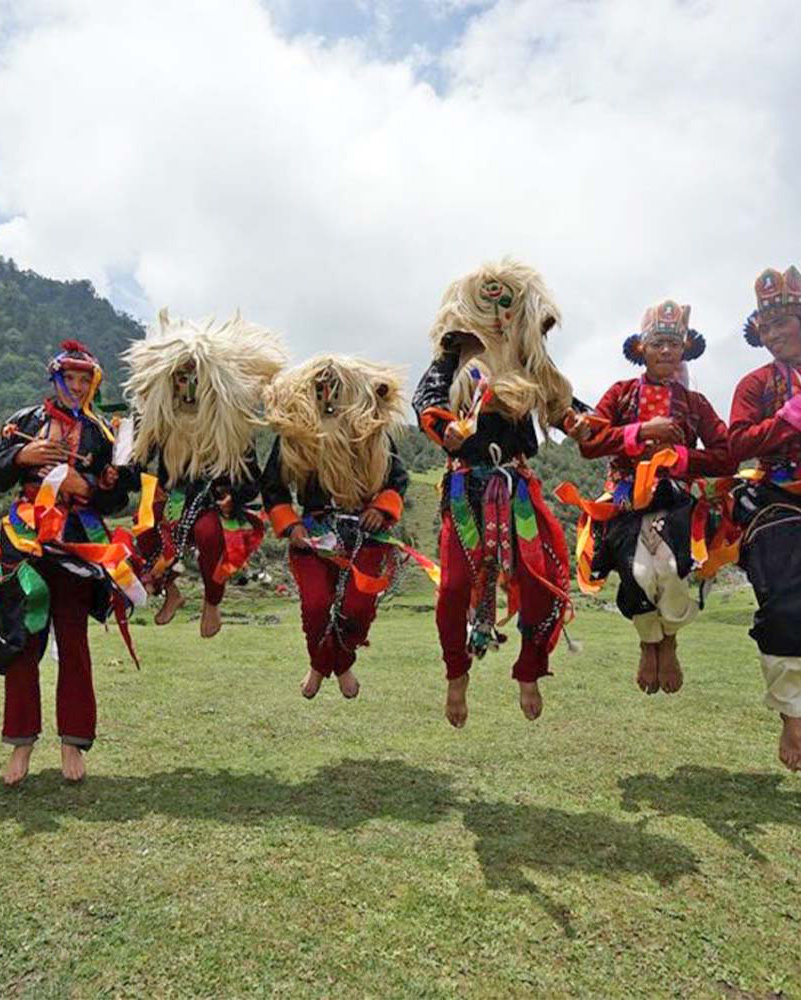
The village tshechus: beyond the famous ones, every valley holds its own - smaller, wilder, and wonderfully intimate.
Who Are the Atsaras?
Ask anyone who has attended a tshechu what they remember, and the atsaras come up immediately: figures in red wooden masks with exaggerated features - long noses, wide grins - who heckle the dancers, tease the dignitaries, chase children through the stands, and demand small donations with theatrical menace. Visitors often mistake them for simple clowns. They are anything but.


Atsaras at work: collecting for the community, shadowing the cham dancers, teasing the crowd, wielding the ritual phallus — and resting between acts.
The word derives from the Sanskrit acharya - "master" or "learned teacher" - and that is the key to understanding them. In Bhutanese tradition the atsara embodies wisdom that transcends conventional norms and appearances - the Buddhist principle of "crazy wisdom," in which enlightenment arrives from unexpected, unconventional sources. By mocking what is solemn, he punctures pride and reminds everyone, monk and minister alike, not to take themselves too seriously. The wooden phallus many atsaras carry symbolizes fertility and protection, and is used to dispel evil spirits.
- They are licensed satirists: their jokes and skits carry pointed commentary on social, political, and even religious issues - a sanctioned space for teasing authority that exists nowhere else in Bhutanese public life.
- They translate the sacred: their parodies of the dances retell the stories in plain, earthy language the whole crowd can follow.
- They collect for the community: the small notes they cajole from spectators traditionally support the monastery and the festival itself.
If an atsara singles you out: play along - it's good luck, and the crowd will love you for it. A small note (Nu. 50-100) placed in his collection box is the graceful response, and they usually delight in posing for photos.
Which Tshechus Should You Attend?
Paro Tshechu (spring) is the most famous, crowned by a giant thongdrel unveiling with the Himalayas behind the dzong. Thimphu Tshechu (autumn) is the capital's grandest gathering. Punakha Drubchen (late winter) re-enacts the 17th-century victory over Tibet with costumed militia. Jambay Lhakhang Drup in Bumthang (autumn) is the most mystical, famous for its midnight naked fire dance. Smaller village tshechus - Gangtey, Haa, Ura - trade scale for intimacy and are wonderful for photographers.
Dates follow the lunar calendar and shift every year - check the festival calendar for this year's dates, or browse our festival tour packages built around the major ones.
Pro Tips
- Arrive early for the best views and atmosphere - dances begin mid-morning
- Festival dates follow the lunar calendar and may shift slightly
- Book accommodation 4-6 months in advance for Paro and Thimphu tshechus
- Bring sun protection: courtyards are open to the sky and the sun is fierce at altitude
How Should You Behave at a Tshechu?
A few courtesies keep you a welcome guest:
- Dress modestly and neatly - locals are in their finest; shorts and singlets are out of place.
- Never walk across the dance ground, and keep clear of the dancers' entrances.
- Photograph freely from the stands, but never with flash, never blocking others, and always ask before close portraits.
- Sit where locals sit, accept the butter tea if offered, and let the day unfold at Bhutanese pace.
Experience It for Yourself
Reading about cham dances and thongdrel unveilings is one thing — standing in the festival crowd is another. These tours are built around the major tshechus, with festival days woven into the itinerary.


Planning a Bhutan trip? Tell us your dates and a Bhutanese travel expert plans the rest - free, and no payment until you confirm.
Book Bhutan TourDo I need a ticket to attend a tshechu?
No - tshechus are religious community festivals, free and open to all. Your guide will bring you as part of your itinerary. Costs come indirectly: flights and hotels around major tshechus sell out months ahead.
How long does a tshechu last?
Usually three to five days, each with a different program of dances. Most visitors attend one or two days; the final day, often featuring the thongdrel unveiling at dawn, is the most powerful.