
The Art of Dzong Architecture: A Visual Guide to Bhutan's Majestic Fortress-Monasteries
Rising from valley floors and commanding mountain passes, Bhutan's dzongs are architectural masterpieces that have served as religious centers and administrative capitals for centuries. Learn to read their design language and understand their enduring significance.
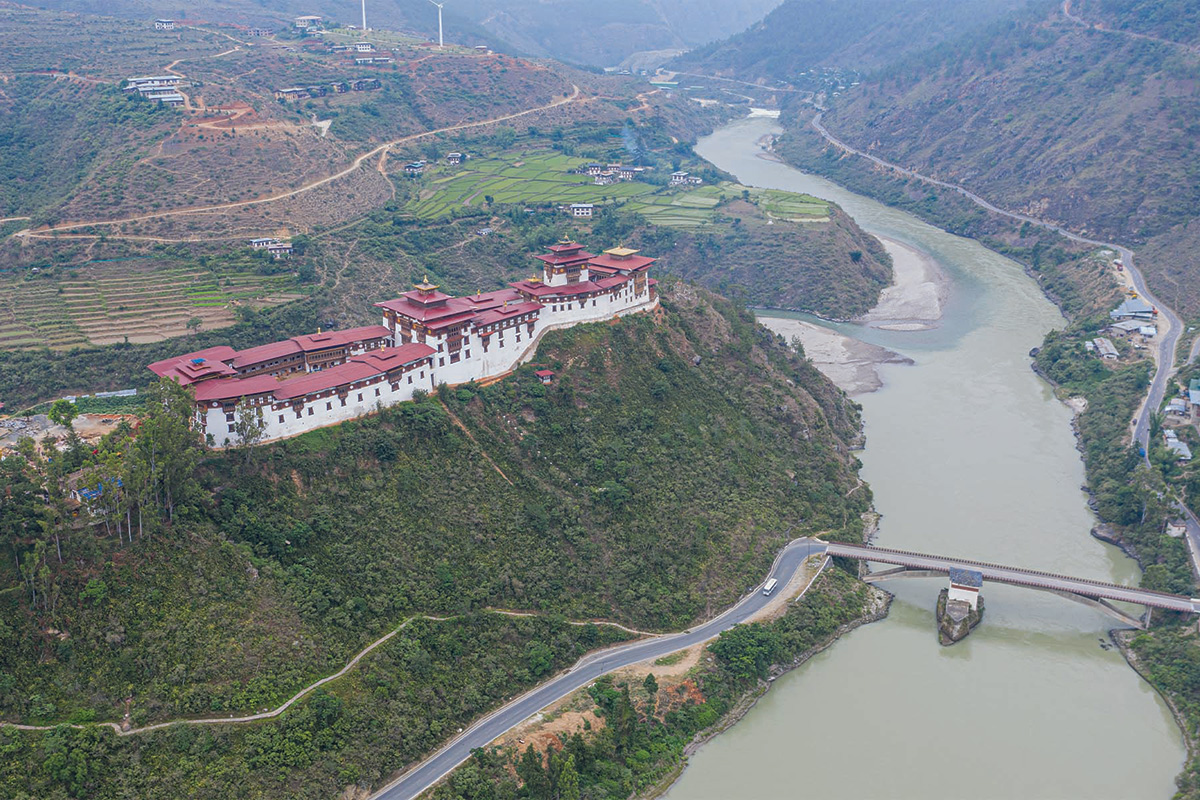
No buildings define Bhutan's landscape like its dzongs. These massive structures, combining fortress and monastery in single complexes, dominate every major valley. Their whitewashed walls, crimson woodwork, and golden roofs create Bhutan's most iconic images. But beyond photogenic beauty lies sophisticated architecture encoding centuries of spiritual, political, and practical wisdom.
Understanding dzong architecture transforms casual sightseeing into a meaningful encounter with Bhutanese civilization.
What Is a Dzong?
The word dzong means fortress, but the structures serve dual purposes. Every dzong houses both the district's civil administration and its religious establishment. Government offices and monk quarters share walls. Courtrooms and prayer halls occupy the same compound. This integration of secular and sacred reflects Bhutan's fundamental organizing principle: the Chhoe-sid Nyis, where religion and governance are inseparable.
The tradition was codified by Zhabdrung Ngawang Namgyal, who unified Bhutan in the 17th century. He established the dual system of governance, with a religious leader (Je Khenpo) and a civil administrator (Desi) ruling jointly. The dzong architecture physically embodied this philosophy, housing both authorities in structures designed to project power and inspire devotion.
Today, twenty dzongs remain active throughout Bhutan. Each serves as the administrative headquarters (Dzongkhag) for its district while supporting a community of monks who maintain religious practice. The buildings are not museums but working institutions where citizens access services, monks study scriptures, and administrators manage governance.
Reading the Architecture
Dzong design follows principles that balance practical defense with spiritual symbolism. Learning to read these elements reveals the intention behind every feature.
Massive walls slope inward as they rise, a technique called batter that increases stability and creates an imposing visual effect. Traditionally, walls were constructed without nails or iron, using interlocking timber and rammed earth or stone masonry. Many walls are several meters thick at the base, designed to withstand both sieges and the region's frequent seismic activity.
Central towers called utse rise above the complex, housing the most sacred chapels. The utse placement typically marks the spiritual center of the dzong. Climbing the utse reveals progressively more sacred spaces, with the highest floors often reserved for the most important shrines or protector deities.
Courtyards (docheys) provide light, air, and gathering space. Most dzongs feature at least two main courtyards: one for administrative functions and one for religious activities. During annual festivals (Tsechus), these courtyards become stages for sacred masked dances, their dimensions carefully proportioned to accommodate both performers and crowds.
Woodwork covering every visible timber surface displays remarkable craftsmanship. Painting these elements requires years of training in Zorig Chusum (the thirteen traditional arts). The crimson color predominates, but careful observation reveals intricate patterns, symbolic motifs like the "Eight Auspicious Symbols," and protective deities.
Punakha Dzong: The Palace of Great Happiness
Considered the most beautiful dzong in Bhutan, Punakha Dzong occupies a peninsula where the Pho Chhu (father) and Mo Chhu (mother) rivers merge. The location creates a natural defense and stunning visual drama as the massive structure rises between flowing waters.
Punakha served as Bhutan's capital until 1955 and remains the winter residence of the Central Monastic Body. The dzong houses sacred relics including the Rangjung Kharsapani and the remains of Zhabdrung Ngawang Namgyal, kept within the strictly guarded Machey Lhakhang.
The approach crosses a traditional cantilever bridge (Bazazam). Entering the dzong reveals a progression of three courtyards. The 17th-century construction has been meticulously restored following multiple fires, glacial floods, and earthquakes, with the most recent major restoration completed in 2004 using traditional techniques to ensure historical authenticity.
Spring visits coincide with jacaranda blooming purple along the riverbanks, framing the white walls with lavender clouds of flowers. The combination of natural beauty and architectural magnificence makes Punakha the definitive dzong experience.
Paro Dzong: Rinpung, the Fortress of the Heap of Jewels
Paro Dzong introduces most visitors to dzong architecture, its massive form visible immediately upon landing at the nearby airport. The 17th-century fortress has witnessed centuries of history and remains actively used for administration and religious practice.
The approach involves a walk across the Nyamai Zam, a traditional covered cantilever bridge. The bridge's wooden beams extend from each bank until they meet in the middle, a technique requiring precise engineering without modern fasteners.
Inside, the courtyards host the famous Paro Tsechu each spring. The main tower rises five stories, and the views from the complex extend across the Paro Valley, with the famous Taktshang (Tiger's Nest) monastery visible on distant cliffs on clear days.
Trongsa Dzong: The Ancestral Seat
Trongsa Dzong sprawls across a ridge in central Bhutan, its multiple levels cascading down the mountainside in a maze of courtyards and temples. It is the largest dzong in the kingdom, and its complex layout can be disorienting to first-time visitors.
This dzong holds special significance as the ancestral home of the House of Wangchuck. By tradition, the Crown Prince serves as the Trongsa Penlop (Governor) before ascending the Golden Throne. This connects the modern monarchy with the historical seat of power.
The location strategically commanded the only east-west route through Bhutan for centuries, giving Trongsa's rulers control over the heart of the country. Even today, the "watchtower" (Ta Dzong) located above the main complex serves as a world-class museum dedicated to the monarchy.
Thimphu Dzong: Tashichho, the Fortress of the Glorious Religion
Bhutan's capital dzong combines administrative importance with religious significance. The building houses the Throne Room and offices of His Majesty the King, major government ministries, and the summer quarters of the Central Monastic Body.
Tashichho Dzong underwent a grand reconstruction in the 1960s under the Third King. Remarkably, this massive expansion was carried out in the traditional manner—without architectural blueprints or the use of nails—to ensure the spiritual and aesthetic integrity of the site was maintained while providing the space needed for a modernizing government.
Conservation and Continuity
Maintaining dzongs requires constant effort. When disasters occur, such as the 2012 fire that destroyed Wangdue Phodrang Dzong, reconstruction follows historical methods. The successful 2022 completion of Wangdue Phodrang's reconstruction proved that Bhutan’s traditional artisan guilds are still capable of monumental feats of engineering.
This commitment to tradition ensures authenticity, though it faces challenges from modern economic pressures. However, the integration of traditional craftsmanship into national vocational training ensures that the skills of the mason, carpenter, and painter are passed to the next generation.
Visiting Dzongs Respectfully
Dzongs are active religious and governmental sites. Appropriate behavior reflects this reality.
Dress Code: Visitors must wear formal attire. This means long-sleeved collared shirts and long trousers for men, and long skirts or trousers with modest tops for women. While Bhutanese citizens must wear traditional dress (Gho/Kira), tourists are expected to be in "smart formal" attire. Hats, umbrellas, and shorts are strictly prohibited inside.
Photography: Photography is generally permitted in the courtyards, but it is strictly forbidden inside temples (Lhakhangs) and administrative offices. Always follow your guide's instructions.
Etiquette: Always walk clockwise around the dzong, stupas, or prayer wheels. Ensure that the structure is always on your right side. Remove shoes before entering any temple or shrine, and speak in hushed tones.
Beyond the Famous Dzongs
While the major dzongs receive the most attention, smaller structures offer intimate experiences. From the newly rebuilt Wangdue Phodrang to the remote Lhuentse Dzong in the east, each district headquarters maintains a distinct character. Traveling beyond the standard route reveals how dzong architecture adapts to varied landscapes while speaking a unified cultural and spiritual language.